
Engineering Tools
Honeycomb Engineering Calculators
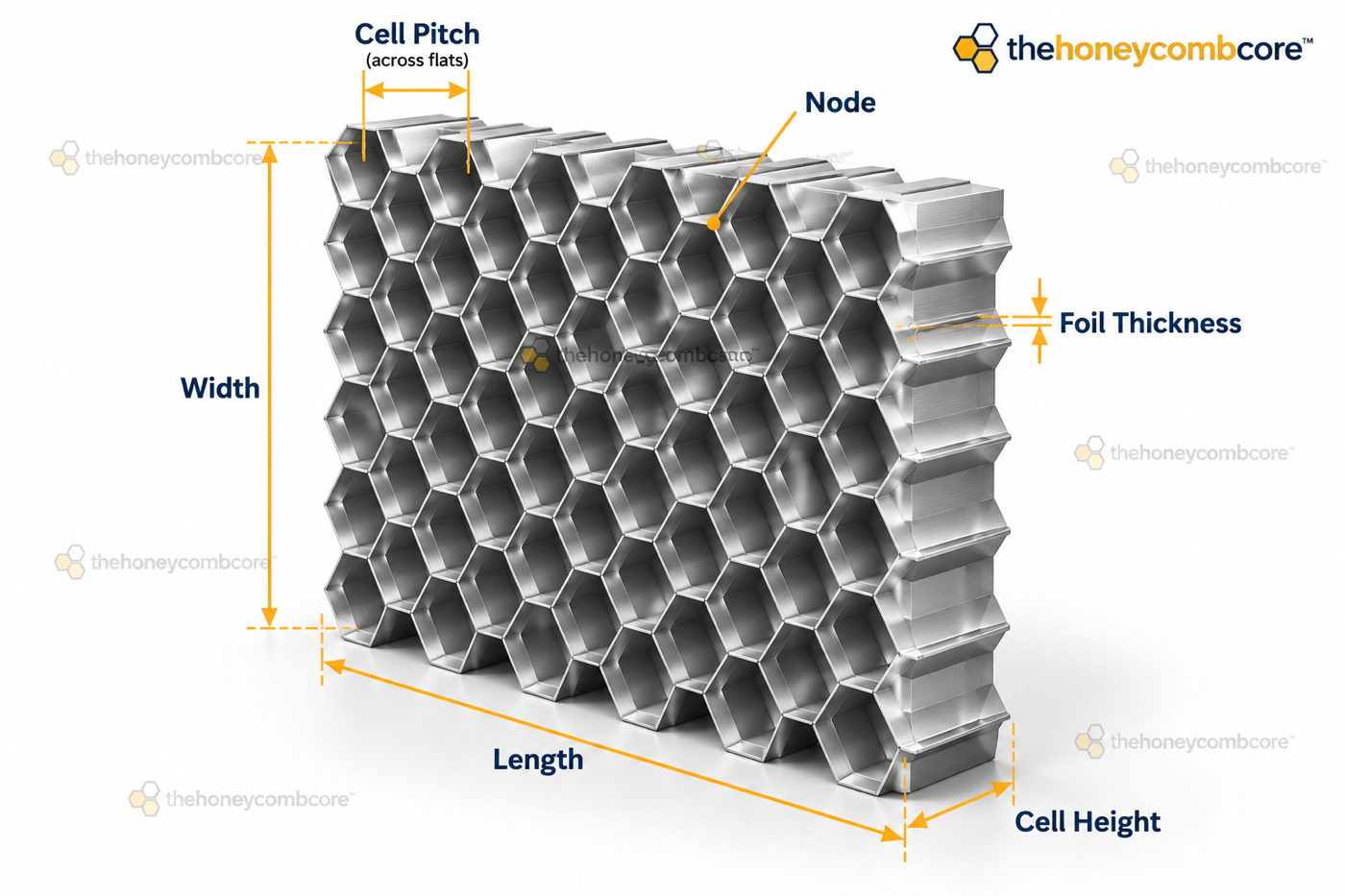
Work a honeycomb core from its cell geometry — relative density and bulk density from cell size and foil gauge, for any foil material — then size the finished sandwich panel weight. All inputs in SI units.
- Relative density
- 4.2 %
- Core density
- 113.75 kg/m³
- Core weight per mm of thickness
- 0.114 kg/m² per mm
Relative density is how much of the core is solid metal rather than air; multiplying it by the solid foil density gives the core's bulk density. Measure the cell size across the flats. Expanded honeycomb bonds its node walls back to back, so keep the default “commercial expanded” model unless you are comparing against an idealised single-wall core. Cell-size convention matters: if a supplier quotes cell size another way, the relative density shifts. Node adhesive and tolerance push real cores a little above this figure.
How to use these. Both results come from the cell geometry: the cell size and foil gauge tell you how much of the core is solid, that gives a core density, and the core density sets the panel weight. They assume a regular hexagonal cell and even foil, and ignore node adhesive, edge close-outs and manufacturing tolerance, so real cores land a little heavier. The same method works for every material — only the foil density changes. Treat the figures as a starting point for conversation, not as certified data. Send us your spec and we'll confirm against measured core.